1. Watching Lotus Seeds Sprout — and What Life Quietly Teaches Me
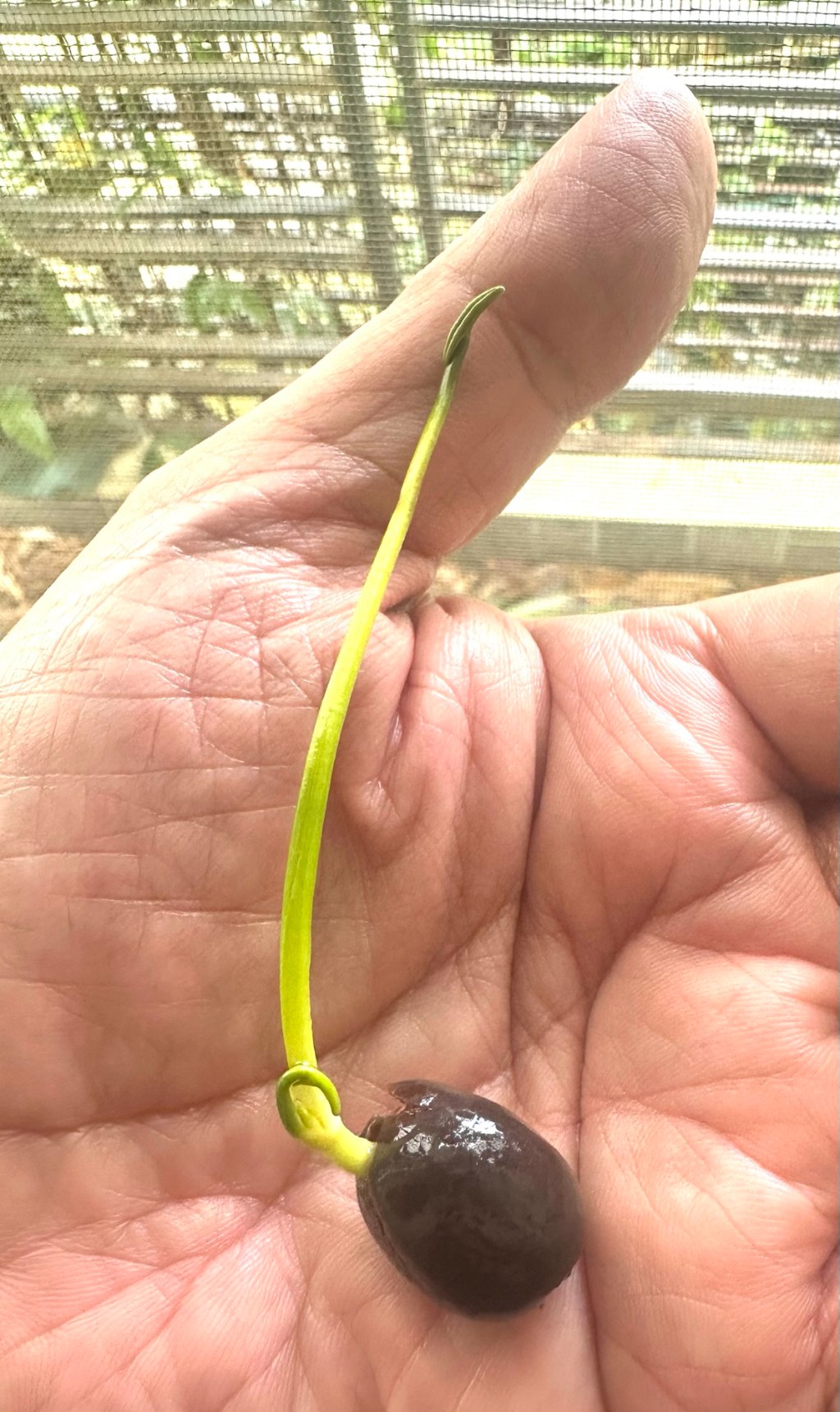
Recently, I tried sprouting a few lotus seeds.
A small thing, really. But as I watched each seed crack open, it felt as if the earth and sky were giving me a quiet lesson.
People told me that if I wanted the lotus seeds to sprout quickly, I should file the shell or cut off one end so water could seep in.
I did that — but I also kept a few seeds intact, thinking:
“In nature, no one files their shells, yet lotus still fills the ponds.”
So I waited.
The seeds with filed shells cracked open in just a few days, green shoots rising like children hungry for sunlight.
The intact ones… stayed still.
Some softened and rotted before they could sprout.
Some took a very long time before a tiny crack finally appeared.
Watching them, I understood:
In nature, a lotus seed must fall into water, lie in mud, and endure long enough for its shell to wear down before it can sprout.
Its thick shell isn’t there to make life difficult — it’s there to keep it from sprouting in the wrong place.
And from that, life lessons began to appear.
—
2. The Lesson of Conditions — Nothing Arises on Its Own
Watching the lotus seeds sprout, I realized:
• Without water, they wouldn’t soften.
• Without mud, they wouldn’t stay warm.
• Without time, they wouldn’t ripen.
• Without friction, they wouldn’t crack open.
Everything needs the right conditions.
People are the same:
• A child grows because of parents, teachers, and friends.
• A person succeeds in work because of capital, opportunity, and support.
• A practitioner progresses because of good teachers, good companions, and a peaceful environment.
No one becomes anything entirely on their own.
Some sprout early because they meet the right conditions.
Some must lie in the mud for a long time before they can rise.
But as long as the good seed remains inside, it will bloom one day.
—
3. The Lesson of Discipline — The Thick Shell of the Lotus Seed
The lotus seed’s thick shell seems useless,
but it keeps the seed from sprouting in the wrong place.
People are the same.
We each have a “shell” that protects us from things that could harm us.
In the spiritual path, this is called precepts or discipline.
To me, it simply means:
Discipline is what keeps us from losing our way.
Without it, we easily “sprout in the wrong direction”:
• Hearing harmful words, we follow them.
• Seeing short-term gain, we forget long-term harm.
• Entering an unhealthy environment, we get swept away.
Discipline is like the lotus seed’s shell:
• In peaceful times, it feels restrictive.
• But when storms or temptations come,
we realize how many times it has saved us.
We keep discipline not to become “good people,”
but to avoid losing the goodness already within us.
—
4. The Lesson of Emptiness — When the Shell Must Decay
When the lotus sprout emerges, the shell — the hardest, thickest part — is the first thing to disappear.
At first, it protects the seed.
But when the sprout needs to rise, the shell must decay.
If it refuses to break down, the sprout will die inside it.
People are the same.
Inside each of us are “shells” created by our own views:
• ego
• pride
• stubbornness
• the belief that we are right
• fear of change
These things once helped us survive.
But if we cling to them forever,
we imprison ourselves in an old shell.
Emptiness isn’t something distant.
It simply means seeing that everything can change —
and that we can change too.
Letting go is not losing.
Letting go is allowing something new to be born.
—
5. The Lesson of Right View — Seeing Clearly to Live Peacefully
Gathering all the lessons from the lotus seed, I see:
• Life is a meeting of conditions.
• We need a shell to protect ourselves.
• Everything must change at the right time.
• Suffering is not for complaining, but for understanding.
• Impermanence is not for sadness, but for lightness.
Right view is not something lofty.
It is simply seeing clearly:
• the right conditions
• the right time
• the right place
• the right action
• the true nature of ourselves and of life
When we see this way,
we live more peacefully,
less impatient,
less blaming,
less stubborn.
Like the lotus seed —
when it understands its “time,”
it cracks open at the right moment,
rises in the right place,
and eventually blooms into a fragrant flower.
Watching the sprout, I tell myself:
People are the same.
Once we see clearly,
peace naturally follows.
—
Closing — When a Lotus Seed Opens the Door to Awakening
This morning, I sat by the water basin, watching a lotus sprout emerge.
No noise — only the soft sound of water,
and a seed slowly opening into its new life.
I suddenly felt that the earth and sky have always been teaching me,
little by little —
the question is whether I sit still long enough to learn.
The lotus seed is never in a hurry.
It lies in the water, breathing in silence.
It lets the mud embrace it,
lets time wear it down,
lets its hardest shell decay on its own.
And then, in a moment no one notices,
a tiny crack appears.
From that crack, life begins.
I understood:
Every transformation begins with a fracture —
a crack in the old, so the new can be born.
The lotus seed does not resist the mud,
does not fear the water,
does not resent time,
does not blame the friction.
It simply accepts everything as it is.
And because of that, it grows.
I ask myself:
If I could accept what is here —
the favorable and the unfavorable,
the joys and the pains —
would I not grow like the lotus seed?
The lotus teaches me:
• Hold on when it’s time to hold on.
• Let go when it’s time to let go.
• Wait when waiting is needed.
• Break open when the moment arrives.
No fighting, no grasping, no rushing, no fear.
Just living in rhythm with the earth and sky.
And I realize:
Right view is not far away.
It is simply seeing things as they are —
no adding, no subtracting,
no forcing, no resisting.
Like the lotus seed —
once we see clearly,
peace naturally arises.
I ended the morning with a gentle breath,
knowing that inside me,
a small lotus sprout had just begun to grow.
(Morning of May 19, 2026)


Bình luận về bài viết này