In the teaching Repentance and Aspiration by Zen Master Thích Nhất Hạnh, the “repentance” part helps us recognize that the root of all suffering is forgetfulness — the moment we lose our presence in the here and now. Moving into the “aspiration” section, he opens a path of renewal through mindfulness in every step, every breath, every posture of walking – standing – lying – sitting.
There is a passage in this teaching that resonates deeply with me:
I vow to return
To live in the wondrous present moment.
In the garden of the heart, may good seeds be sown,
Cultivating understanding and love.
I vow to learn the art of deep looking,
To train myself to see and understand profoundly,
To perceive the true nature of all phenomena,
And transcend birth and death, dust and sorrow.
—
Returning to the Present Moment – the First Function of Mindfulness
When something unpleasant happens — especially in a relationship that is cracking — our mind is easily swept away by overthinking: loops of self‑blame, self‑judgment, and endless interpretation.
In those moments, we are pulled away from the present.
Mindfulness helps us stop.
Stopping to return.
Returning to see clearly.
This is the first function of the mindful energy we cultivate every day: bringing us back to the present moment, where we can see things with a mind that is not clouded or distorted.
—
Watering the Seeds – Understanding and Love
In the garden of the heart, understanding and love are two great seeds. But if we look closely, we will see that they are not merely seeds — they have already blossomed in the very relationship that is now fractured.
The beautiful moments, the times when both of you supported each other, understood each other, loved each other… these are evidence that healing is possible.
What matters is this:
We must never place ourselves in the position of “the more awakened one,” “the one who practices better.”
The phrase “I am the one who practices” is only meant to remind us to stop, to be patient, to be compassionate — not to create a fancy wrapper for the ego.
—
Looking Deeply – Seeing the True Nature of the Cracks
This is the part I cherish most.
When a relationship cracks, we often only see the surface collisions: words, actions, attitudes. But in reality, that crack is a seed both people have quietly watered for a long time. The recent event is simply “the condition that allowed it to manifest.”
Therefore, if only one person takes responsibility — no matter how sincere — it merely patches the surface.
The seed of rupture inside is still there.
To transform at the root, we must look deeply to see the true nature of the mistake.
If conditions are sufficient — transformation happens.
If not yet — we help the crack sink back down by watering the seeds that can stabilize the relationship.
In the old days, when a water jar cracked, people didn’t just seal the crack — they banded the jar so the fracture wouldn’t spread.
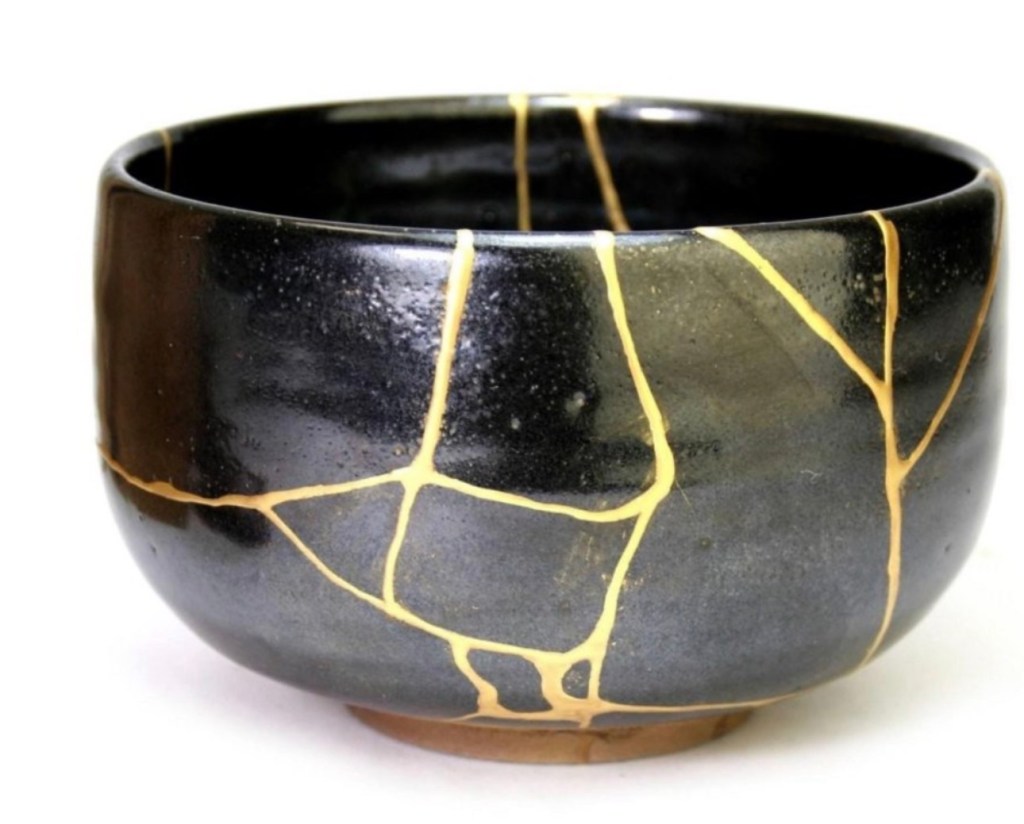
The Japanese use the art of Kintsugi, mending broken pottery with gold, turning damage into beauty.
In life, we can “band” a relationship with small but sincere actions:
• Loving speech
• A handwritten letter
• A small, thoughtful gift
• A message conveyed through a respected third person
These are the golden threads of Kintsugi in human relationships.
—
As We Grow Older – The Journey Home Becomes Even More Essential
The older we get, the more we carry relationships that have been fractured for years.
Life used to sweep us along too quickly; we skimmed past them and left them behind.
Now we live more slowly.
We know how to repair body and mind.
And we have the chance to look deeply into old wounds to renew ourselves.
When we can forgive ourselves — we become lighter.
When we can embrace others — we become wider.
Just like that, we set down the burden of guilt, resentment, and the broken pieces we have carried throughout that relationship.
—
Conclusion
Repentance to see the roots.
Aspiration to renew.
Mindfulness to return.
Insight to transform.
This is the path Zen Master Thích Nhất Hạnh has shown us — the path of understanding and love, of deep looking and gentle letting go, of healing ourselves so we can heal others.
(Morning of August 18, 2026 — Ho Chi Minh City)


Bình luận về bài viết này