I. Introduction: The Buddha’s Teaching Through the Eyes of Ordinary People
Those who study the Buddha’s teaching while living a lay life often stand between two worlds:
one filled with daily responsibilities, and another filled with profound spiritual insight.
Two foundational statements of the Buddha — “Be a lamp unto yourselves” and “The Dharma I realized can still be seen by those who come and see for themselves” — form a bridge between these worlds.
These teachings do not demand that ordinary people become saints.
They simply invite each person to become a clearer, wiser version of themselves.
—
II. The Dharma the Buddha Saw and the Dharma the Buddha Spoke: Two Different Realities
The Buddha realized the nature of reality through direct experience — beyond language, beyond concepts.
Yet when teaching, He had to rely on worldly language, which is inherently limited.
Thus:
• The Dharma He saw is the entire forest.
• The Dharma He spoke is only a handful of leaves.
If later generations cling to those leaves and believe they represent the whole forest, they miss the essence of the teaching.
This is why, before passing away, the Buddha said:
“In all these years, I have not uttered a single word.”
He did not deny His teachings; He reminded us that words are only tools, not truth itself.
—
III. The Torch and the Borrowed Flame
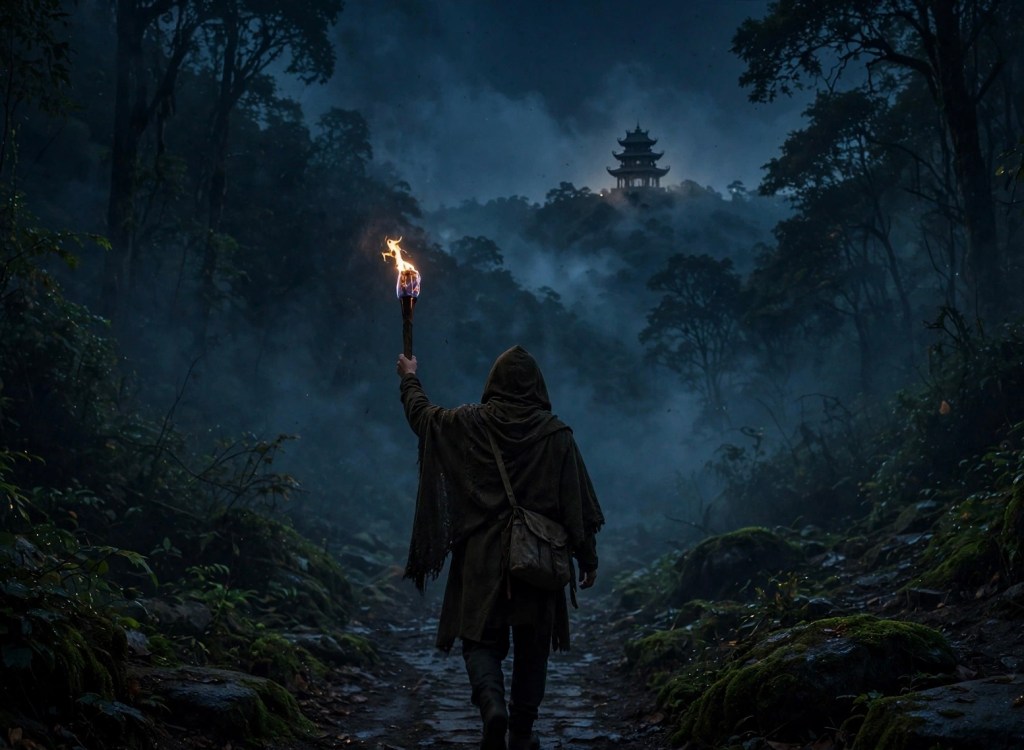
The Buddha’s words are like a torch.
Those who listen to the Dharma can only borrow its flame to light their own torch.
No one can walk using another person’s light.
No one can awaken through borrowed experience.
Therefore, every teaching of the Buddha carries the spirit of:
• non‑dogmatism,
• non‑coercion,
• non‑blind belief,
• encouragement of direct seeing.
—
IV. There Is No “Universal Right Dharma”
One of the greatest misunderstandings in later generations is the belief in a fixed, universal “Right Dharma” — a rigid standard used to judge what is correct or incorrect, orthodox or deviant.
But according to the Buddha:
Right Dharma is whatever brings genuine benefit to the person practicing it.
Not benefit to the masses,
not benefit to institutions,
not benefit to tradition.
Thus:
• The Right Dharma for one person may not be the Right Dharma for another.
• Each person’s insight is unique, impossible to copy.
• No one has the authority to use their own understanding as a standard to judge others.
—
V. The Risks of Rigid Forms and Established Traditions
Over time, to help later generations access the teachings, traditions created:
• methods,
• rituals,
• systems of practice,
• conceptual frameworks.
These are helpful for beginners.
But they also carry risks:
• attachment to form,
• forgetting the spirit of “lighting one’s own torch,”
• judging other paths,
• turning the Dharma into fixed doctrines,
• unintentionally distorting the original meaning.
Lay practitioners must recognize these risks to avoid being trapped by them.
—
VI. Everyday Right Dharma: The Goal of Ordinary People
Ordinary people do not need to attain lofty spiritual achievements.
They do not need to master scriptures.
They do not need to understand profound philosophy.
What truly matters is:
• becoming clearer each day,
• reducing anger each day,
• cultivating contentment each day,
• living with more compassion each day,
• causing less suffering to oneself and others.
If one can do this, one is already living in accordance with the Buddha’s spirit.
This is Right Dharma in everyday life.
—
VII. Conclusion: Lighting One’s Own Torch
The Buddha’s two statements are not abstract philosophy.
They are simple reminders:
See for yourself.
Live for yourself.
Grow in clarity by yourself.
The Dharma is not for worship, debate, or judgment.
It is for practice, experience, and transformation.
An ordinary person needs only one torch —
and they themselves must be the one to light it.


Bình luận về bài viết này