The Dharma is not in scriptures — it is in life
I. Introduction: A simple truth often forgotten
In Buddhist study, people often speak of “learning the Dharma,” “listening to the Dharma,” “reciting the Dharma,” “studying the Dharma.”
But the deeper one goes, the clearer a simple truth becomes:
The Dharma is not in scriptures.
The Dharma is in life.
Scriptures are descriptions.
Life is where the Dharma manifests.
Scriptures are the finger pointing at the moon.
Life is the moon itself.
This is the essence of living Dharma — the Dharma that is unfolding in every moment, without waiting for us to open a book or enter a meditation hall.
—
II. Why is the Dharma not in scriptures?
1. Because scriptures are words, while Dharma is reality
Words may be beautiful, profound, and poetic.
But words are still symbols.
The Dharma is direct experience:
• seeing anger as it arises,
• seeing desire as it forms,
• seeing confusion as it clouds the mind,
• seeing the mind pulled by emotion.
That is the Dharma.
No text required.
2. Because scriptures belong to the past, while Dharma belongs to the present
Scriptures were recorded in another era,
another language,
another cultural context.
But the Dharma is happening right now:
in how we react,
in how we love,
in how we get angry,
in how we let go.
3. Because scriptures are tools, while Dharma is the goal
Scriptures guide us.
But the Dharma is what we must see for ourselves.
No one can see the Dharma on our behalf.
No one can realize it for us.
—
III. What is living Dharma?
Living Dharma is not philosophy.
Not conceptual systems.
Not Pāli or Sanskrit terminology.
Living Dharma is the truth manifesting in our own life.
Living Dharma is:
• the irritation when criticized,
• the craving when seeing something desirable,
• the fear when facing uncertainty,
• the ease when letting go,
• the clarity when seeing the mind directly.
Living Dharma is the mind in motion.
—
IV. Living Dharma in everyday moments
1. When anger arises
The Dharma is not in the sentence “anger is poison.”
The Dharma is in the anger burning inside you.
If you see it → that is Dharma.
2. When desire appears
The Dharma is not in the phrase “craving leads to suffering.”
The Dharma is in the wanting that tightens the chest.
If you see it → that is Dharma.
3. When sadness comes
The Dharma is not in the teaching on impermanence.
The Dharma is in the heaviness sitting in your heart.
If you see it → that is Dharma.
4. When joy arises
The Dharma is not in the line “happiness comes from the mind.”
The Dharma is in the warmth spreading through your being.
If you see it → that is Dharma.
—
V. Why living Dharma matters more than textual Dharma
1. Because textual Dharma points the way, but living Dharma transforms
Listening to teachings does not reduce anger.
Seeing anger reduces anger.
2. Because textual Dharma can create attachment, while living Dharma does not
Clinging to scriptures, languages, or doctrines → burdens the mind.
Seeing Dharma in life → frees the mind.
3. Because textual Dharma belongs to others, while living Dharma belongs to you
Textual Dharma is the insight of the Buddha, of teachers, of tradition.
Living Dharma is your own insight.
4. Because textual Dharma may not fit the era, while living Dharma always fits the moment
Scriptures were spoken for ancient audiences.
Living Dharma is spoken for you, right now.
—
VI. How to see living Dharma
1. Pause for a moment
A 1–2 second pause before reacting → the Dharma appears.
2. Observe the mind like watching clouds pass
No judgment.
No suppression.
No chasing.
3. Ask: “What is this moment teaching me?”
Every moment carries a lesson.
Seeing the lesson → that is Dharma.
4. Seek Dharma in life, not only in texts
Scriptures guide.
Life reveals.
—
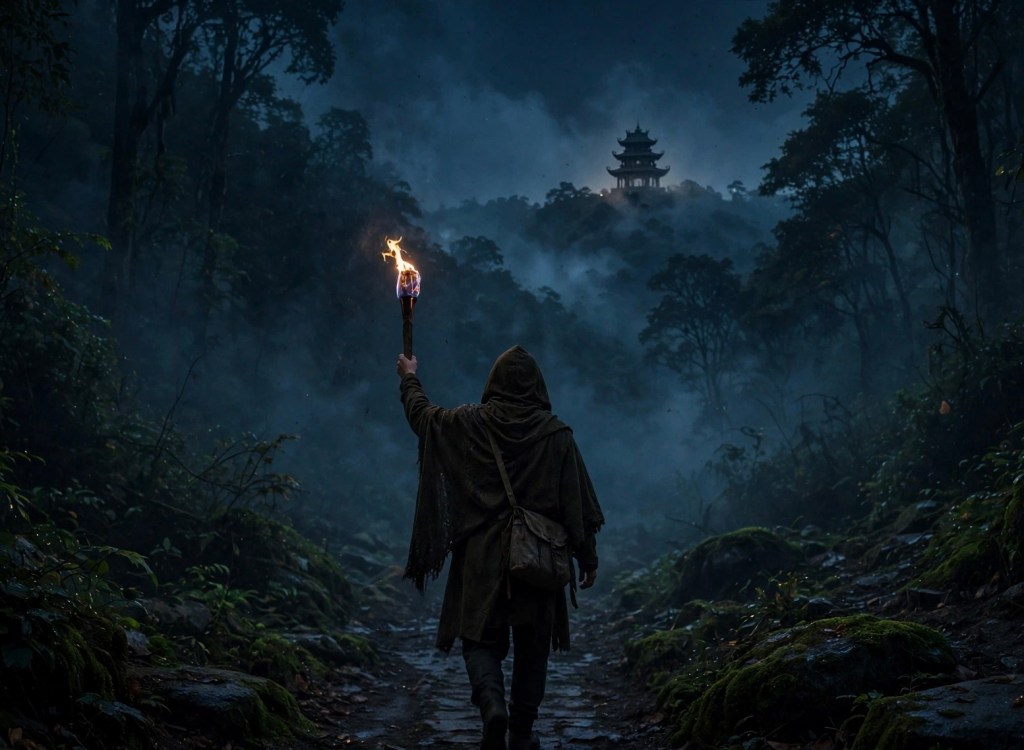
VII. Living Dharma and the spirit of “lighting your own lamp”
Living Dharma is the foundation of lighting your own lamp.
Why?
• No one can light your lamp for you.
• No one can see the Dharma for you.
• No one can transform your mind for you.
Living Dharma is the real flame.
Textual Dharma is only borrowed fire.
—
VIII. Conclusion: Living Dharma is true Dharma
The Dharma is not in scriptures.
Not in words.
Not in original languages.
Not in philosophical systems.
The Dharma is in your life.
The Dharma is in your mind.
The Dharma is in your own seeing.
Scriptures are maps.
Life is the actual terrain.
Textual Dharma is the finger.
Living Dharma is the moon.
And only when you light your own lamp will you see that moon clearly.


Trả lời