Not to “attain Dharma,” but to borrow its light and ignite one’s own lamp
I. The question: “Why study Dharma?”
On the surface, the teachings offer many answers:
• Dharma transforms suffering
• Dharma guides the path
• Dharma leads to liberation
• Dharma must be learned with the Sangha
• Dharma is the path of understanding and love
Even the Plum Village chant The Three Refuges speaks of:
• the role of Dharma,
• the power of Dharma,
• the need to learn with the community,
• and Dharma as the path of transformation.
All of this is true — but only relatively true.
Because when we look deeper, especially through the lens of the Diamond Sutra and the Prajñāpāramitā tradition, a very different truth appears.
II. The Diamond Sutra: “Before studying with great teachers, I had not attained any Dharma.”
This statement is astonishing.
It means:
• Dharma cannot be “attained.”
• Dharma is not an object.
• Dharma is not a possession.
• Dharma is not a result of learning.
This is the heart of Dharma-without-attainment — pháp vô sở đắc.
If Dharma cannot be attained, then why study it?
Because Dharma is not the destination.
Dharma is the light that helps you see the destination.
III. Dharma is not the path — Dharma is the light that reveals the path
The Buddha did not teach Dharma to create a doctrine.
He taught because:
• he saw humans have innate awakening,
• he saw everyone has the seed of clarity,
• he saw everyone can ignite their own lamp.
Dharma is like sunlight reflected on snow.
It is like starlight traveling thousands of years to reach us.
It is not the sun.
It is not the star.
It is the light that helps us see.
Dharma does not give you awakening.
Dharma helps you see awakening within yourself.
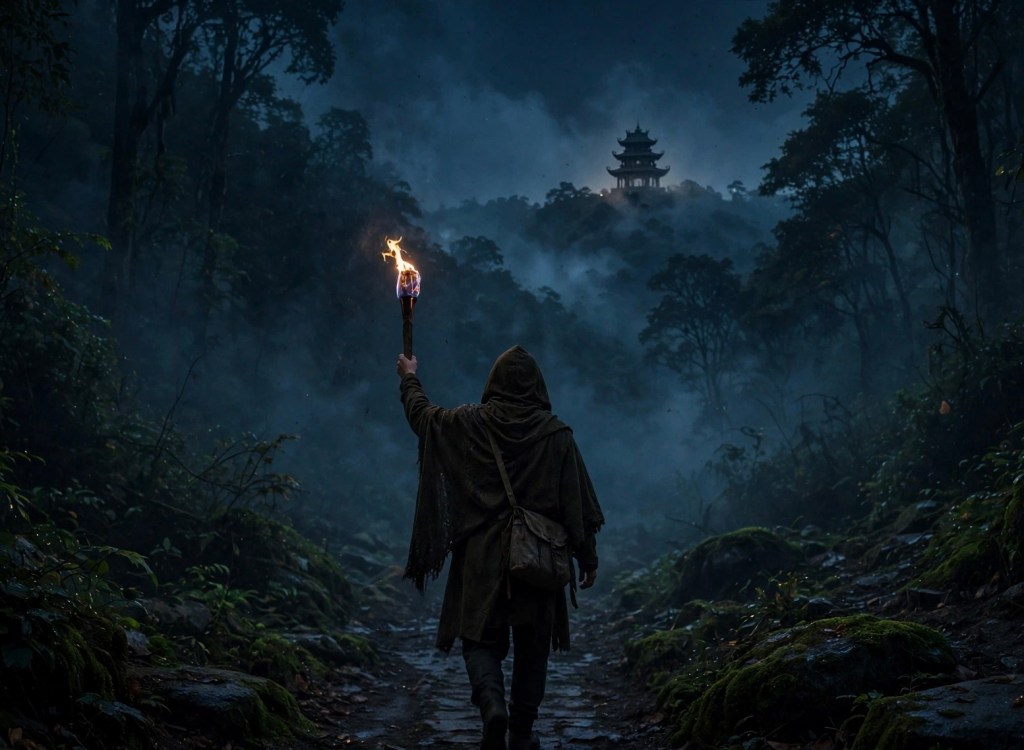
IV. “Be a lamp unto yourself” — Dharma is borrowed light
When the Buddha said:
• “Be a lamp unto yourself”
• “Come and see”
he was not telling people to follow his teachings blindly.
He was telling them:
Use the teachings as borrowed light
until your own lamp ignites.
Just like the Inuit (Eskimo) people who ignite fire using the sun’s reflection —
they do not worship the sun;
they borrow its light to create their own flame.
Dharma is borrowed light.
Your insight is the flame.
V. “Come and see” — but come where?
Most people assume:
• “Come to the Buddha’s teachings.”
• “Come to the scriptures.”
• “Come to the Dharma as recorded.”
But this is too narrow.
There is no such thing as “Buddha’s Dharma” as a fixed entity.
What we call “Buddha Dharma” is simply:
• teachings spoken to specific people,
• in specific situations,
• with specific needs.
So “come and see” does not mean:
• come to the texts,
• come to the doctrines,
• come to the tradition.
It means:
Come to the remaining light of the teachings —
borrow it until you can see with your own eyes.
VI. Why did the Buddha say: “In 40 years, I have not taught a single Dharma”?
Because:
• Dharma is not in words,
• Dharma is not in scriptures,
• Dharma is not in concepts.
Dharma is in direct seeing.
Words are limited.
Concepts are conditioned.
Teachings are contextual.
Only your own insight is real.
VII. So why study Dharma? — the final answer
Not to attain Dharma.
Not to attain enlightenment.
Not to attain any spiritual achievement.
But to:
• borrow the light of ancient understanding,
• borrow the compassion embedded in the teachings,
• borrow the clarity of those who saw before us,
so that we can:
• ignite our own lamp,
• see our own mind,
• understand our own suffering,
• transform our own habits,
• walk our own path.
Dharma is not the fire.
Dharma is the spark.
The fire must be yours.
VIII. Dharma is like starlight — beautiful, ancient, but not enough by itself
The teachings we have today are like starlight:
• thousands of years old,
• faint compared to the original source,
• beautiful but limited,
• inspiring but not sufficient.
They cannot ignite everyone.
They cannot transform everyone.
They cannot liberate everyone.
Only your effort,
your sincerity,
your clarity,
your karmic conditions
can ignite your lamp.
IX. Liberation in one human lifetime — small, humble, but real
“Like a donkey carrying heavy loads,
each day it drops a little,
and that is already the right path of transformation.”
This is the essence of realistic liberation:
• not cosmic enlightenment,
• not supernatural awakening,
• not mythical attainment.
But:
• dropping burdens,
• seeing clearly,
• suffering less,
• loving more,
• understanding deeper.
This is the liberation available to humans —
and it is more than enough.
X. Conclusion: Dharma is the light — but the lamp must be yours
Dharma helps you:
• see,
• understand,
• soften,
• transform.
But Dharma cannot:
• walk for you,
• see for you,
• awaken for you.
The Buddha gave us light,
not awakening.
Awakening must be yours.
And that is why we study Dharma:
Not to attain it,
but to borrow its light
until our own lamp shines.


Trả lời