There are things one must live through for decades — the changes of a life, the changes of Saigon — before the heart becomes quiet enough to remember them. Like this morning, at Lê Thị Riêng Park, as the chanting of a memorial service rose into the early sunlight, I suddenly felt myself returning to the Saigon of nearly half a century ago.
Back then, my neighborhood was poor but full of affection. After ’75, everything was scarce — except kindness. When an elderly person living alone passed away, the young men in the alley gathered to help with the funeral. My mother joined the procession too. In those days, especially in the small alleys of old Saigon, when someone died, the whole neighborhood walked them to their final resting place. No one told anyone to do it; it was simply how things were.
That day, as we passed a patch of graves overgrown with grass, my mother told me about my younger brother — the child just one year behind me, who lived only a few short years before being laid to rest in Đô Thành Cemetery. We were poor, and a child’s grave was simple, unattended. My mother visited whenever she could, but one day, even she could no longer recognize where her son had been buried. Later, the cemetery was cleared to make way for the park. And my mother has been gone nearly thirty years now.
Every time I passed that old ground, something tightened in my chest — a little sorrow, a little tenderness, a quiet ache. The kind of ache Saigon people carry: not dramatic, not spoken aloud, just warm and heavy somewhere inside.
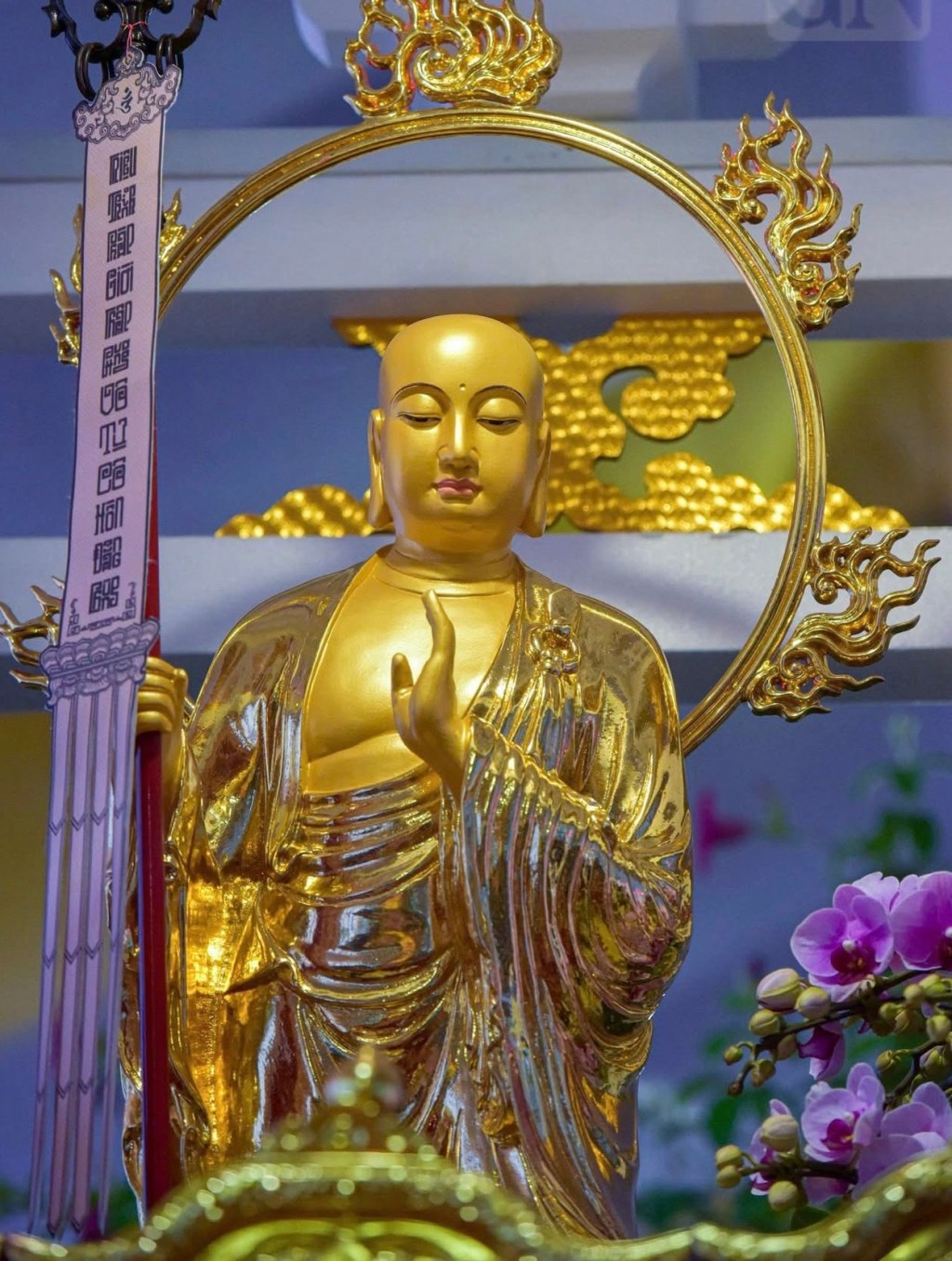
This morning, the park held a memorial ceremony for the Mậu Thân mass graves. I felt it must be a kind of karmic timing. I came, sat down, and listened to the chanting. I listened for myself, and for my mother. As if the two of us had returned together, to finally release the lingering knot tied to a small grave that had long dissolved into Saigon’s soil.
The wind stirred the colorful prayer flags. Watching them, I suddenly understood:
Formlessness does not mean the absence of form — it means not being held by any form.
And impermanence is not something distant. It lives in every change of this city, in every loss, in every moment of liking or disliking — all the things we must learn to let go of, so we don’t get entangled in what is happening right now, whether it is a memory returning, a pain in the body, or a heaviness in the heart.
Today, I am no longer caught in the search for my brother’s grave.
And I know: wherever she is, my mother is at peace.
Because right here, in a Saigon that has changed countless times, I am at peace.
(Sunday morning, June 14th, 2026 — the last days of the Fourth Lunar Month)


Bình luận về bài viết này