In modern life, many people hear words like “spiritual practice” or “diligent cultivation” and immediately feel they are distant, lofty, or difficult to approach. Yet true practice is not stepping into another world. Practice is a return — a return to oneself, and also a return to the traditional values that have nourished our people for generations.
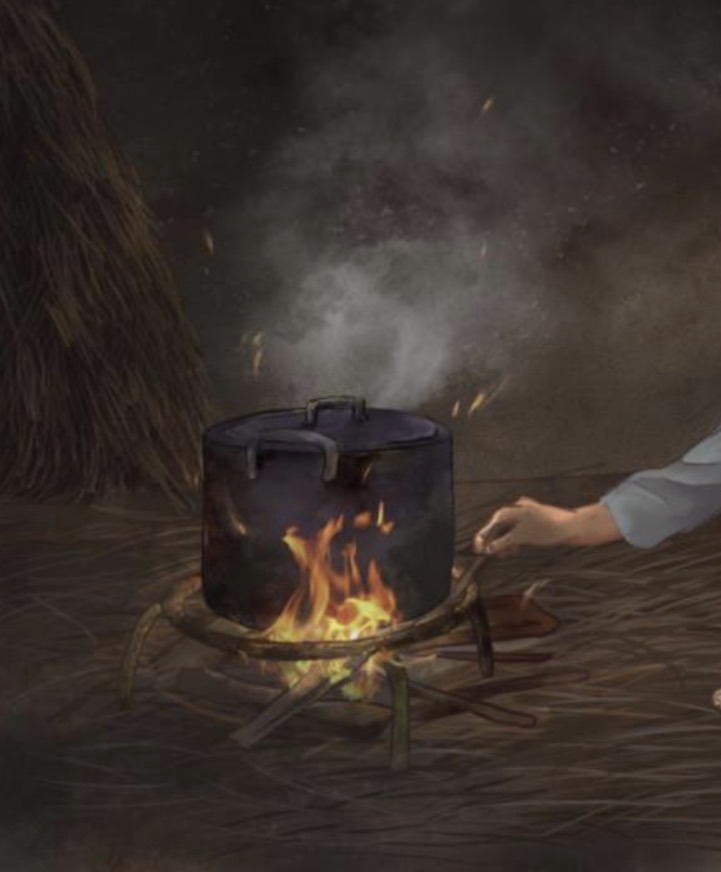
One of the most beautiful images from that tradition is the simple act of cooking rice and tending the fire.
1. Preparing Straw and Kindling — Preparing the Mind
In the old days, to light a fire, one had to choose dry straw and good wood. Wet straw would not catch, and rotten wood produced weak flames. This was a small “craft,” passed down from mothers to daughters, from grandmothers to grandchildren.
In spiritual practice, this “straw and kindling” is nothing other than the wholesome seeds already present within us:
• compassion
• patience
• the capacity to listen
• simplicity
• gratitude
These qualities are not learned from somewhere far away.
They live in our family habits, in our memories, in the breath of Vietnamese tradition.
Practice begins by picking up what is already there, not by searching for something new.
2. Rice and Water — Body and Mind
A pot of good rice cannot be made without rice and water.
Rice is the substance; water is the harmony.
Without either, rice cannot become rice.
In practice, rice is the mind, and water is the body.
• The mind is like grains of rice: sometimes hard, sometimes coarse, sometimes covered in dust.
• The body is like water: soft, receptive, the environment in which the mind can be transformed.
When rice and water come together, the pot can begin to cook.
When body and mind come together, a human being can begin to be at peace.
Practice is the art of bringing body and mind back into one stream, like rice and water blending in the pot, no longer two separate things.
3. Lighting the Fire — Beginning the Practice
Lighting the fire is always the hardest part. Straw catches quickly but dies quickly. The flame flares up, then fades. The cook must bend close to the stove, blowing gently, patiently, steadily.
Practice is the same.
The beginning is always difficult.
• Sitting still for a few minutes already feels restless
• A few mindful breaths and the mind runs everywhere
• Trying to let go, and old habits rush back
But no one becomes skillful at lighting a fire in one try.
And no one removes all afflictions in a single day.
Each time we return to the breath, each time we recognize a feeling, we are blowing gently into the flame of awareness within us.
4. Keeping the Fire — Sustaining Mindfulness
A good cook is not the one who lights the biggest fire, but the one who keeps the fire steady.
Too much fire, the rice burns.
Too little fire, the rice stays raw.
An inconsistent fire makes the rice half‑cooked, half‑burnt.
In practice:
• When anger rises → soften the flame with breathing
• When tired → nourish the flame with rest and kindness
• When distracted → steady the flame by returning to the body
Keeping the fire means keeping awareness alive in each step, each word, each gesture.
Mindfulness is not mysterious.
It is simply staying with oneself, the way a cook stays with the fire.
5. “When the Rice Boils, Lower the Flame” — The Art of Preventing Suffering
Every Vietnamese cook knows the golden rule:
When the rice begins to boil, lower the flame.
If not, the rice will overflow, burn, or spoil.
In daily life, when emotions “boil,” we too must lower the flame:
• When anger rises → pause for one breath
• When misunderstood → listen before reacting
• When a loved one is tense → speak more gently
• When conflict flares → use kind speech instead of sharp words
Lowering the flame is the art of stopping, so we do not harm ourselves or others.
It is the art of listening, so we can understand the suffering beneath the surface.
It is the art of kind speech, opening the door to reconciliation.
A skillful cook knows when to reduce the fire.
A skillful practitioner knows when to stop.
6. Tending the Flame — Observing the Mind
Cooking rice requires knowing how to “tend the flame”:
when to add straw, when to remove wood, when to let the fire simmer.
Practice is the same.
We must learn to observe the mind:
• When the mind is burning → do not add “fuel” through argument
• When the mind is cold → add warmth through encouragement
• When the mind is calm → protect that calm gently
Observing the mind is an art.
No forcing, no suppressing — only seeing deeply, then adjusting softly.
7. Rice Becoming Rice — The Four Elements in Harmony, Body and Mind as One
When rice and water are cooked by fire, they are no longer two separate things.
They become rice — fragrant, nourishing, whole.
In practice, when body and mind are cared for, when breath (air), body (earth), feelings (water), and energy (fire) come into harmony, we too become whole.
This is the harmony of the four elements.
This is body and mind in oneness.
This is the rice of peace, cooked from our very own afflictions.
We do not burn away our suffering.
We cook it, gently, with understanding and love.
Just as hard grains become soft rice, afflictions can become wisdom.
8. Returning to Tradition — Returning to Ourselves
When we contemplate the image of cooking rice and tending fire, we see that practice is not something distant or monastic.
It is woven into family life, into the kitchen hearth, into the warmth of home, into the Vietnamese soul.
Tradition is not merely memory.
It is a pathway that shows us:
• practice is natural
• practice is ordinary
• practice is the continuation of the beauty already within us
Vietnamese people keep the fire in the kitchen to nourish the family.
A practitioner keeps the fire in the heart to nourish peace.
In truth, these all are one.


Bình luận về bài viết này